


Fashion Chronicles
Matthieu Blazy: The Designer Who Speaks the Language of Modern Luxury
From Céline to Bottega Veneta, and now Chanel, one designer has redrawn the line between craft and spectacle.
Matthieu Blazy is the most consequential luxury designer working today. Born in Paris in 1984 and trained at La Cambre in Brussels, he turned Bottega Veneta into the house that defined quiet luxury, then took the artistic directorship of Chanel. His signature is craft that asks to be read twice: leather disguised as denim, a weave so exact it registers as texture rather than logo. To follow Blazy across three houses is to watch modern luxury learn to speak quietly.
Who Is Matthieu Blazy?
Raf Simons hired Blazy straight out of La Cambre. In 2011 he moved to Maison Margiela, where he worked on the Artisanal line, the anonymous atelier collections that taught him construction matters more than branding. No designer signs that work. It is judged only on how it is made.

He joined Céline in November 2014 as a senior designer on the pre-collections, under Phoebe Philo. Minimalism became his grammar there. Two years later he was at Calvin Klein as design director of womenswear, reunited with Simons, and stayed until 2019.
Bottega Veneta brought him in as design director in 2020 and promoted him to creative director in November 2021. By then Blazy had spent a decade learning to make pieces that announce nothing and reveal everything. That restraint became his calling card.
The Bottega Veneta Years: Craft Over Logos
Blazy led Bottega Veneta until December 2024, and the work travelled fast. His trompe l’oeil leather, cut and finished to pass as a flannel shirt or a pair of worn jeans, stopped the front row at his first show. The house signature Intrecciato weave returned at new scale, softer and more sculptural than the version that made the name.

His own designs entered the canon quickly. The Kalimero arrived in 2022. The Andiamo followed in 2023, its name the Italian for “let’s go,” its top closed with a knot of braided leather. The Sardine, with a polished brass handle shaped precisely like a sardine, became the bag of summer 2023. Not one of them carries a visible logo. Recognition comes from the hand of the maker, the kind of object understood only by those already inside the conversation.
How to Recognise a Blazy-Era Piece
The tell is always construction. A Blazy-era Bottega is defined by what has been removed: no hardware that announces itself, no stamped monogram, no contrast stitching used as decoration. The weave carries the whole identity.

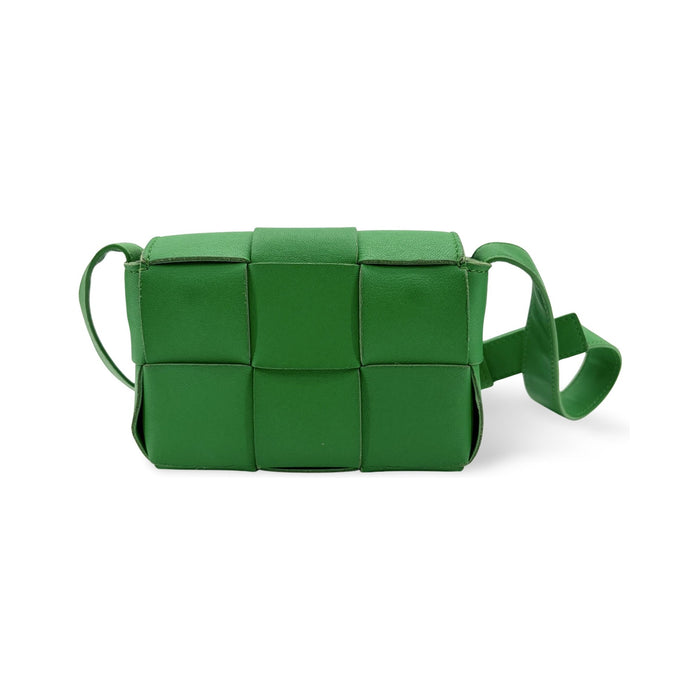
Look at the intrecciato itself. Under Blazy the strips widen and the weave loosens, so the surface reads as a textile rather than a grid. Leather is treated until it behaves like another material entirely, which is the trompe l’oeil principle applied to a bag rather than a runway look. Check the interior stamp for the production period, and check the weave tension against the house’s own archive images before trusting a listing.
This is also where authentication earns its fee. Logo-free design removes the counterfeiter’s easiest target and moves the whole question onto craft, which is far harder to fake and far harder for a buyer to assess alone. Every piece Brandsamsara takes in is verified with Entrupy before it reaches the floor.
The luxury was the construction. The logo was the absence of one.
Why Blazy-Era Pieces Are Worth Owning Now
Designer departures change the math. When a creative director leaves a house, the pieces made under their direction stop being produced and begin their second life as archive. Blazy closed his Bottega chapter in December 2024. That tenure is now finite, and finite is what collectors price.
The logic runs the other way at Chanel. The house named him in December 2024 and he showed his first ready-to-wear collection at the Grand Palais in October 2025, followed by a Métiers d’art collection staged in New York and a couture debut in Paris in January 2026. Three collections in, the direction is set but the codes are still moving.
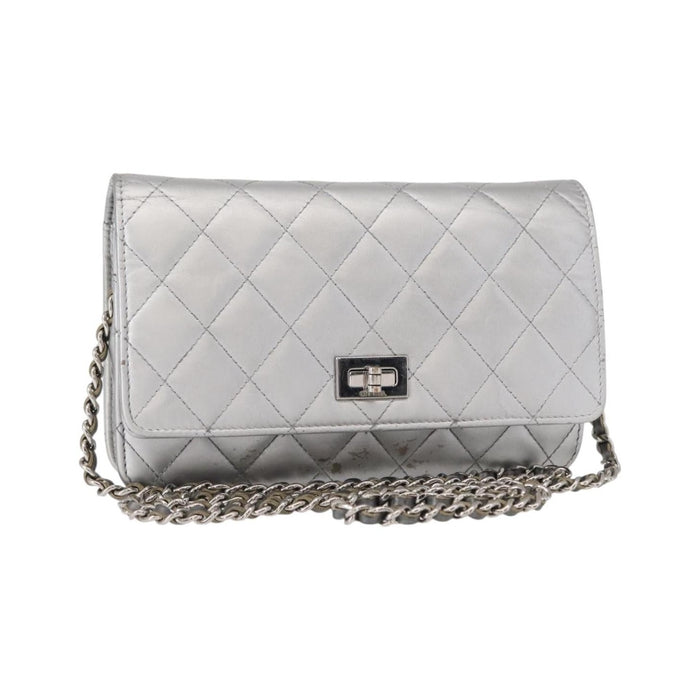
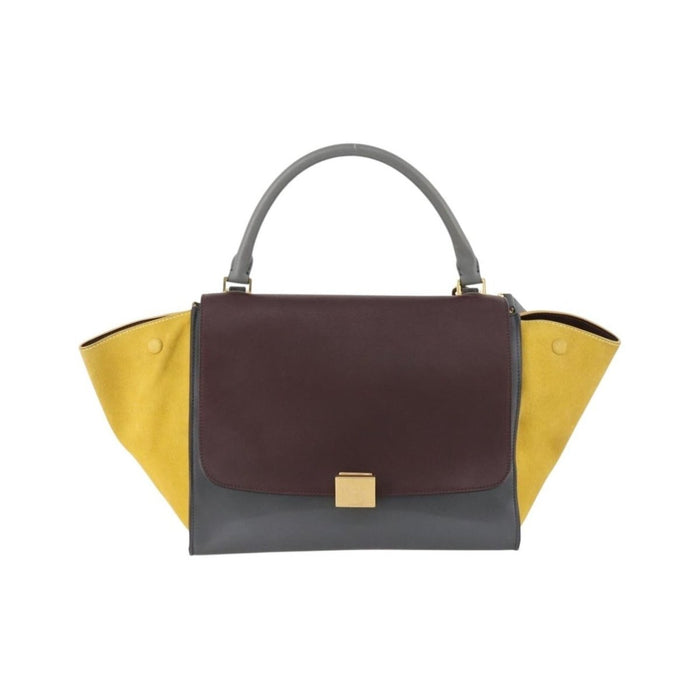
That makes the Chanel bags that came before him the known quantity: heritage with a fixed identity, bought with confidence rather than speculation. The Céline of the Philo years sits in the same category, which is why a Trapeze or a Trio holds its price while newer designs are still being argued over.
1984
Born in Paris. Trained at La Cambre, Brussels, then hired by Raf Simons straight out of school.
2011
Joins Maison Margiela, working on the anonymous Artisanal line.
2014
Joins the Céline studio under Phoebe Philo, where minimalism becomes his grammar.
2021 to 2024
Creative director at Bottega Veneta. The tenure that defined quiet luxury.
2025
Artistic director of Chanel. Ready-to-wear debut at the Grand Palais, October.
Matthieu Blazy: Questions Answered
Who is Matthieu Blazy?
Matthieu Blazy is a Paris-born fashion designer, born in 1984 and trained at La Cambre in Brussels. He was creative director of Bottega Veneta from November 2021 to December 2024 and is now artistic director of Chanel. He is known for craftsmanship-led design rather than overt branding.
Which bags did Matthieu Blazy design for Bottega Veneta?
Blazy’s signature Bottega Veneta bags include the Sardine, with its sculptural brass handle, the Andiamo, with a knotted leather top, and the Kalimero. The earlier Cassette and Jodie were introduced under his predecessor Daniel Lee, then carried forward during Blazy’s tenure.
When did Matthieu Blazy join Chanel?
Chanel named Blazy artistic director in December 2024, succeeding Virginie Viard. His first ready-to-wear collection was shown at the Grand Palais in Paris in October 2025, followed by his Métiers d’art debut in New York and his haute couture debut in Paris in January 2026.
Are pre-loved Bottega Veneta bags a good investment?
Designer-era pieces tend to hold value once production ends, particularly logo-free designs defined by craftsmanship. Condition and verified authenticity matter most. A Blazy or Daniel Lee era Bottega bag in excellent condition, authenticated properly, is a considered buy rather than a gamble.
What makes quiet luxury different from logo fashion?
Quiet luxury locates value in material and construction rather than in a mark anyone can read across a room. It rewards the buyer who recognises a weave, a finish or a proportion. Blazy’s Bottega Veneta is the clearest recent example, and the reason the term entered general use at all.
Three houses tell the Blazy story. Céline, where he learned restraint. Bottega Veneta, where he became a name. Chanel, where he now writes the next chapter. Brandsamsara curates pre-loved pieces from all three, each authenticated with Entrupy at the Athens showroom, so the language of modern luxury can be owned rather than chased.
Our Curated Edit
Recent Articles
-

Matthieu Blazy: The Designer Who Speaks the Lan...
From Céline to Bottega Veneta, and now Chanel, one designer has redrawn the line between craft and spectacle.
Matthieu Blazy: The Designer Who Speaks the Lan...
From Céline to Bottega Veneta, and now Chanel, one designer has redrawn the line between craft and spectacle.
-

The Bags That Shaped Fashion: Six Iconic Design...
From Jackie Onassis dodging the paparazzi to Princess Diana on the steps of the Grand Palais, six iconic designer bags defined their decades. Brandsamsara traces the stories behind them, and...
The Bags That Shaped Fashion: Six Iconic Design...
From Jackie Onassis dodging the paparazzi to Princess Diana on the steps of the Grand Palais, six iconic designer bags defined their decades. Brandsamsara traces the stories behind them, and...
-

130 Years of the Louis Vuitton Monogram
The Louis Vuitton Monogram is one of the most recognizable patterns in luxury fashion. Discover how it was created, what the iconic symbols represent, and why it has remained timeless...
130 Years of the Louis Vuitton Monogram
The Louis Vuitton Monogram is one of the most recognizable patterns in luxury fashion. Discover how it was created, what the iconic symbols represent, and why it has remained timeless...


